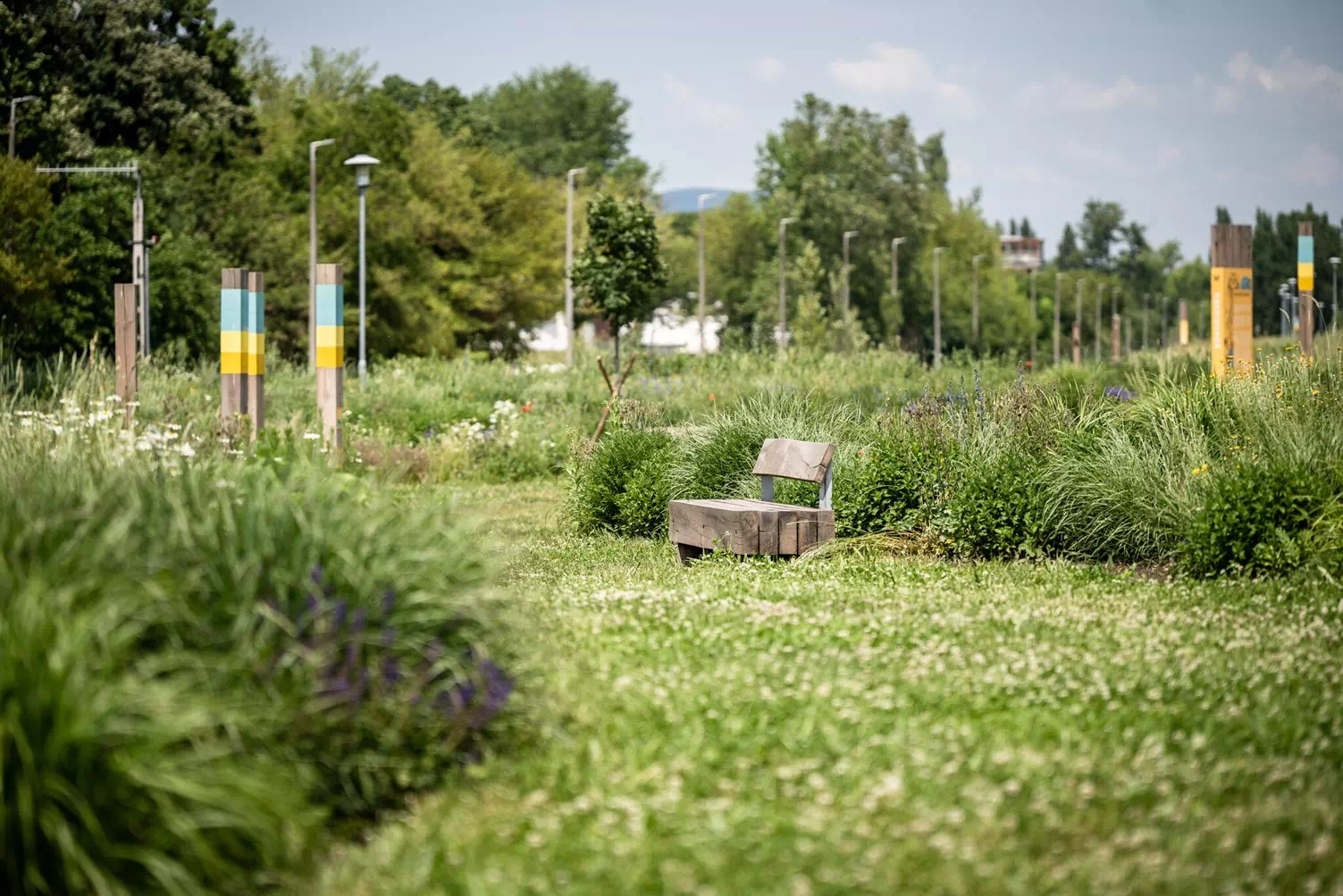
Caption: Pünkösdfürdő Park, Budapest (Photo source: Budapest Városháza, Képszerkesztőség / Pelikán János)
P2R Summit host, Budapest charts its path to resilience with creativity, collaboration, and a focus on quality of life
The city of Budapest is strengthening its climate adaptation efforts through the Pathways2Resilience initiative, with a clear focus on turning fragmented measures into a cohesive strategy for resilience.
Hungary’s capital city has already laid important groundwork. The city has developed a green development strategy to support adaptation and completed a rainwater strategy centered on sustainable urban drainage systems. Budapest is now shifting attention toward tackling the urban heat island effect. These steps, alongside existing adaptation measures, provide the building blocks for a more structured approach.
Budapest boasts several recent innovations to meet resilience goals while improving quality of life: a new, award-winning ecological park along the Danube (pictured above), a water collection and purification project to manage runoff, and public space improvements to tackle water and heat issues simultaneously.
In its work to manage urban flooding, extreme heat, and other climate hazards, like the spread of invasive species and public health threats, Budapest faces several governance challenges. These include data gaps, inefficient cross-sectoral and multi-level cooperation, limited financing, as well as indifferent or negative attitudes halting behaviour change.
Budapest’s P2R Journey
Despite these barriers, Budapest hopes to create a resilience strategy and action plan, strengthen collaboration, embed adaptation work into the municipal budget, and plan bankable climate adaptation investments.
Through Pathways2Resilience, Budapest is demonstrating how cities can face climate change with realism, creativity, and ambition. Budapest sums up its resilience journey with three “C” words:
- Challenging – climate adaptation is never simple, involving complex risks and diverse impacts.
- Creative – resilience requires fresh ideas and cross-sector expertise, from health care to engineering to landscape architecture.
- Costly – adaptation demands significant investment, but the long-term benefits outweigh the costs.
This honest and forward-looking perspective reflects Budapest’s recognition that adaptation is not just a technical task but a transformative journey requiring resources, innovation, and collaboration.#
“What we expect from the project is to collect all these pieces of the puzzle and put them together into a framework that will guide us in implementation,” explained Orsolya Barsi, Head of the Department for Climate and Environmental Affairs at the City of Budapest.
Budapest as Host for the Next Summit
The city is preparing to welcome international partners to the next P2R resilience summit. “We are very excited to host the event in Budapest. Bringing together the current cohort and the new one in the same place will spark valuable discussions. Budapest is at the heart of Europe, easy to reach, and a living demonstration of climate challenges,” Barsi stated.
With the hilly Buda side facing flood risks from the Danube, and the flat Pest side prone to frequent urban flooding, Budapest exemplifies the very adaptation challenges under discussion. Hosting the summit in her city offers not only logistical advantages but also a powerful symbol of why international cooperation is vital. Barsi adds, “We hope this event will not only deepen discussions but also create new international friendships and collaborations.”